
Cat Trees That Don’t Look Like Carpeted Nightmares
How to choose livable cat furniture — vertical space, real scratch zones, and the trees and scratchers we actually use at home.
By Ash · Updated September 13, 20263 min read

You do not need nine catalog trees. You need vertical space, scratchable surfaces, and something that does not make your living room look like a abandoned carnival. Start with furniture that actually lives in real homes — then expand if your cats annex another wall.
Most “best cat trees” lists are a collage of beige towers that photograph like evidence. This guide reframes the problem: livable cat furniture. Height where cats want it, textures they will use, and a silhouette you can leave in the frame when friends come over.
Who this is for
- People who refuse another particleboard tower with peeling carpet petals
- Renters and design-conscious owners who still need cats off the curtains
- Multi-cat homes that need more than one nap tier without filling the room
- Anyone rebuilding after a cheap tree died mid-sprint
What matters more than “nine options”
Stability and footprint
A tall tree that wobbles teaches cats to distrust it and teaches you to flinch. Wide bases, solid joins, and placement against a wall beat another decorative hammock nobody uses. Measure the floor square you are willing to sacrifice before you fall in love with a product photo.
Scratch + perch, not just carpet volume
Cats scratch to stretch and mark. Sisal posts, cardboard angles, and carpet panels earn their keep when they are where cats already want to be. A tree that is only soft platforms with no honest scratch zone becomes a dusty sculpture.
Wall and floor as a system
One freestanding tree plus a wall path or floor scratcher often beats a single mega-tower. Think circulation: can a cat go up, across, and down without a diplomatic incident with the dog?
How to shop without collecting beige regrets
Ignore “holds eight cats” marketing unless you have eight cats and a ballroom. Look at base width vs height, whether platforms are replaceable, and whether the carpet or sisal looks like it will survive a dedicated shredder. Wood and paper-rope finishes photograph well and can look intentional; they still need to be bolted together like you mean it.
Place the main tree where cats already loiter — near a window, along a hallway run, or beside the sofa they already claim. A gorgeous tree in a dead corner becomes storage for mail. If you are mid-renovation or moving soon, prioritize modular scratchers and wall panels you can take with you over a permanent shrine.
What we actually have in the house
These are the pieces we recommend from real use — starting with what actually lives in real homes, not a fake nine-pack. Loud leopard print that somehow still works, an L-shaped scratcher for the stretch, floor carpet for dedicated shredding, and wall climbing carpet when you want vertical without another freestanding tower.
Livable picks we use
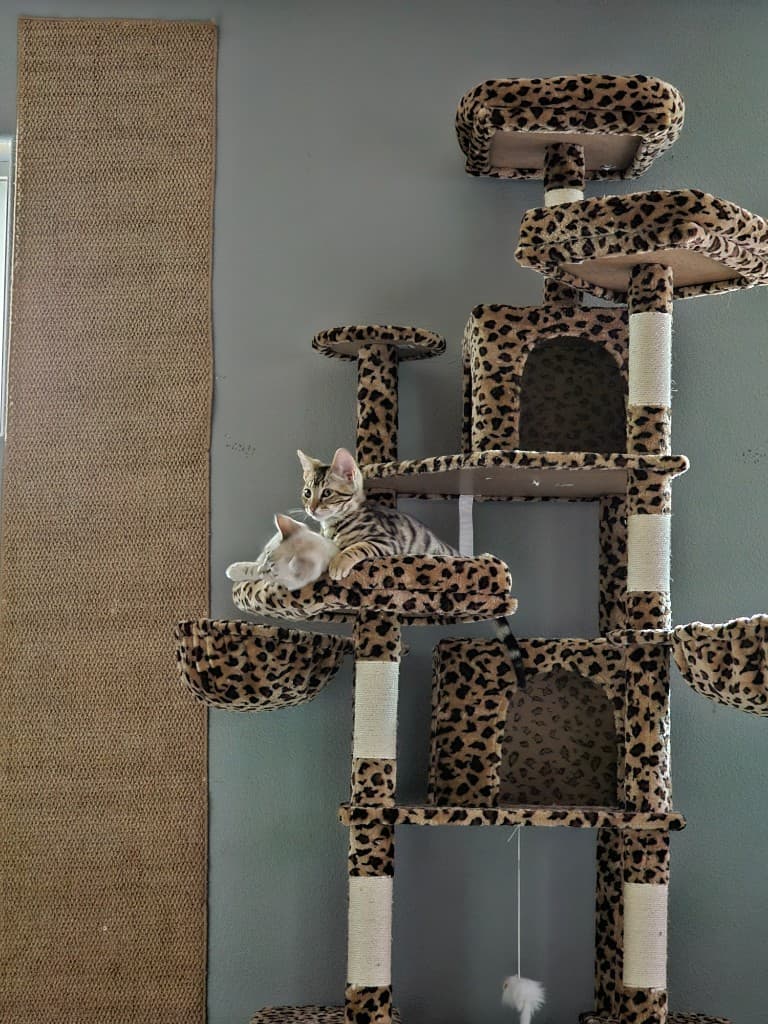
Leopard-Print Cat Tree
Tall, ridiculous, actually used. Vertical space, lounging, perches, and scratching in one loud piece of furniture my cats actually claim.
Why we like it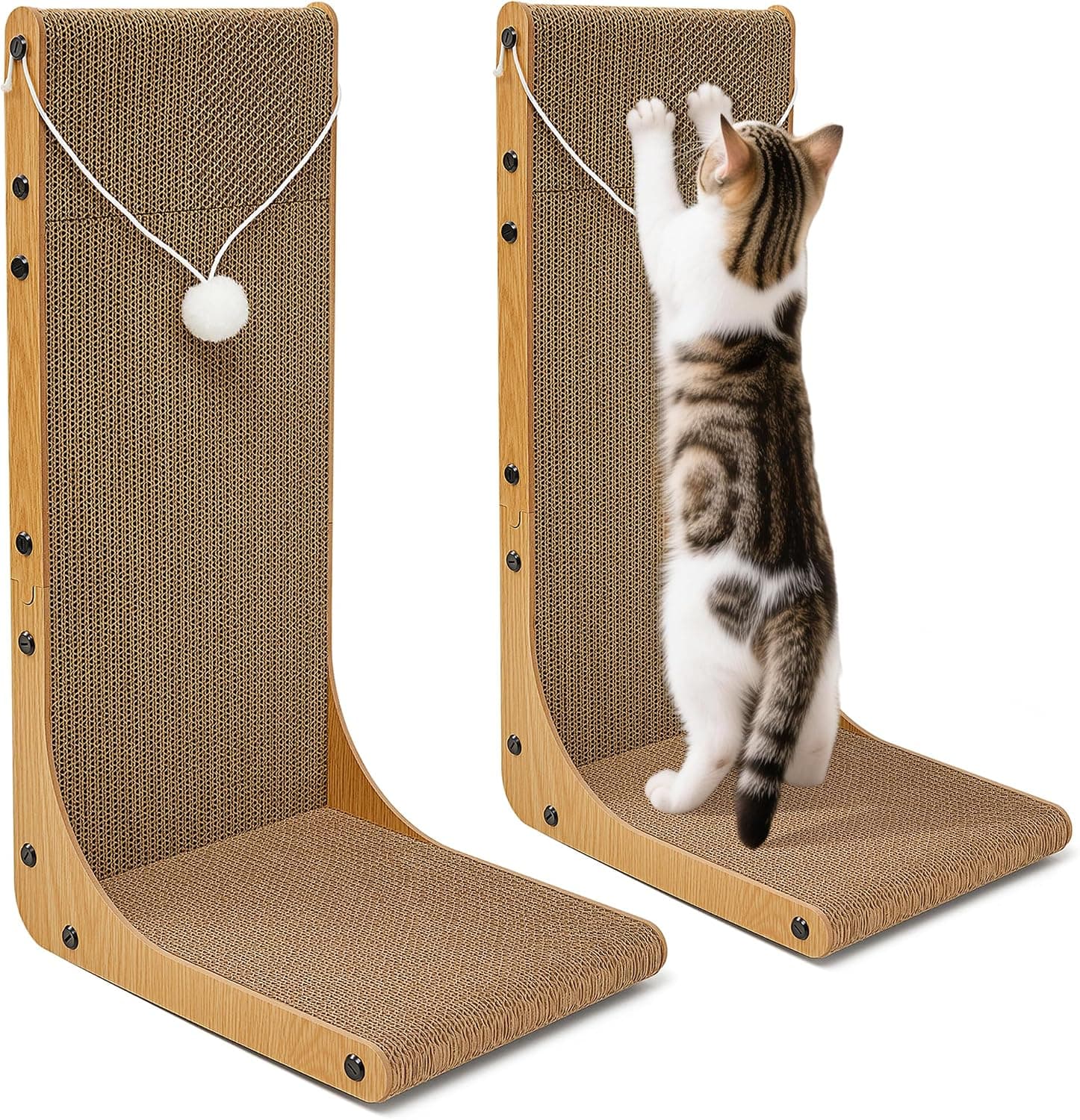
L-Shaped Cat Scratcher
Two-pack cardboard L pads that go vertical or horizontal, wall-mountable, with toy balls. Furniture protection that looks like it belongs there on purpose.
Why we like it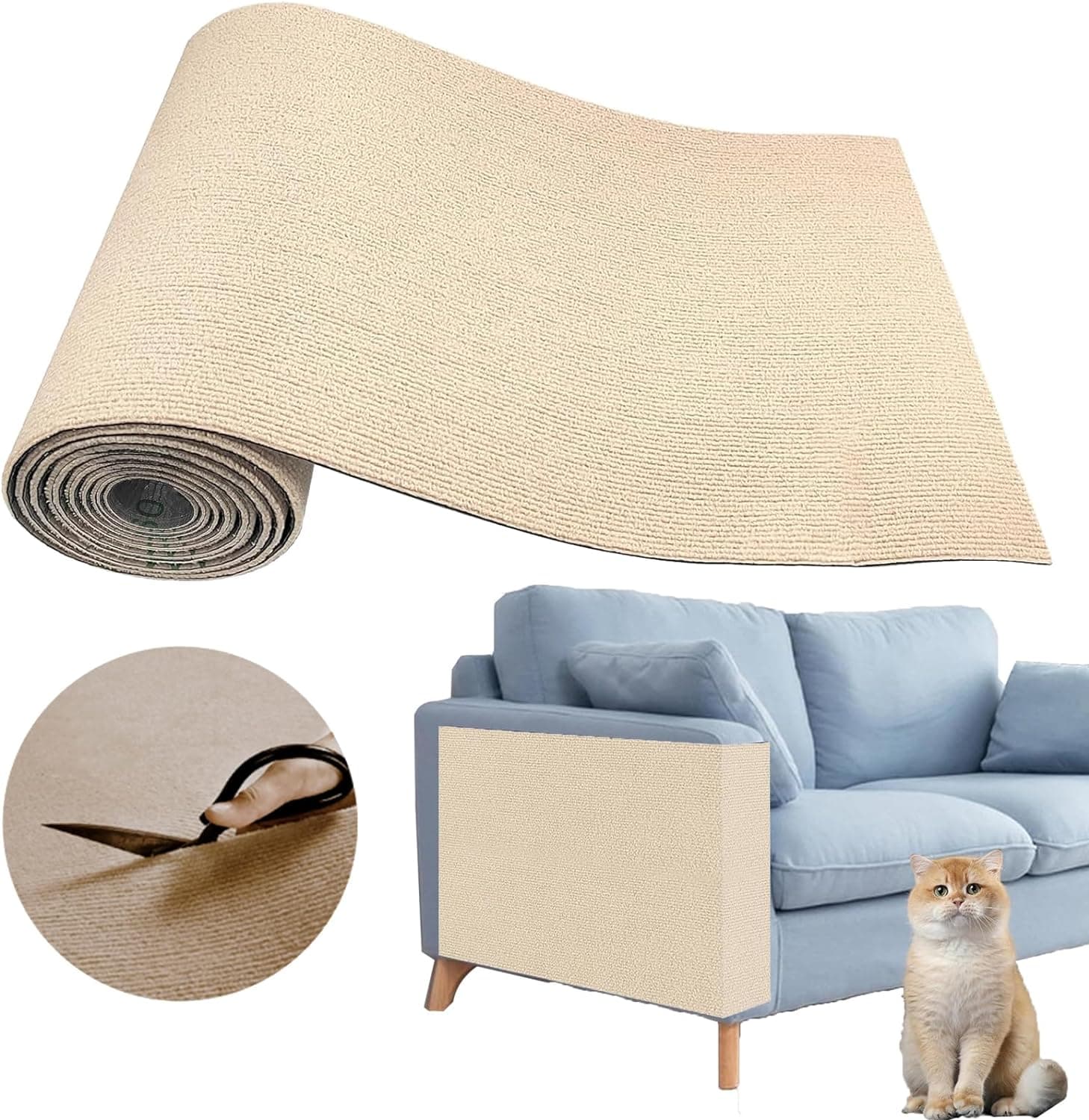
Scratch Carpet Mat
Self-adhesive carpet protectors for the couch corners your cat already claimed. Scratch here, furniture lives another day.
Why we like it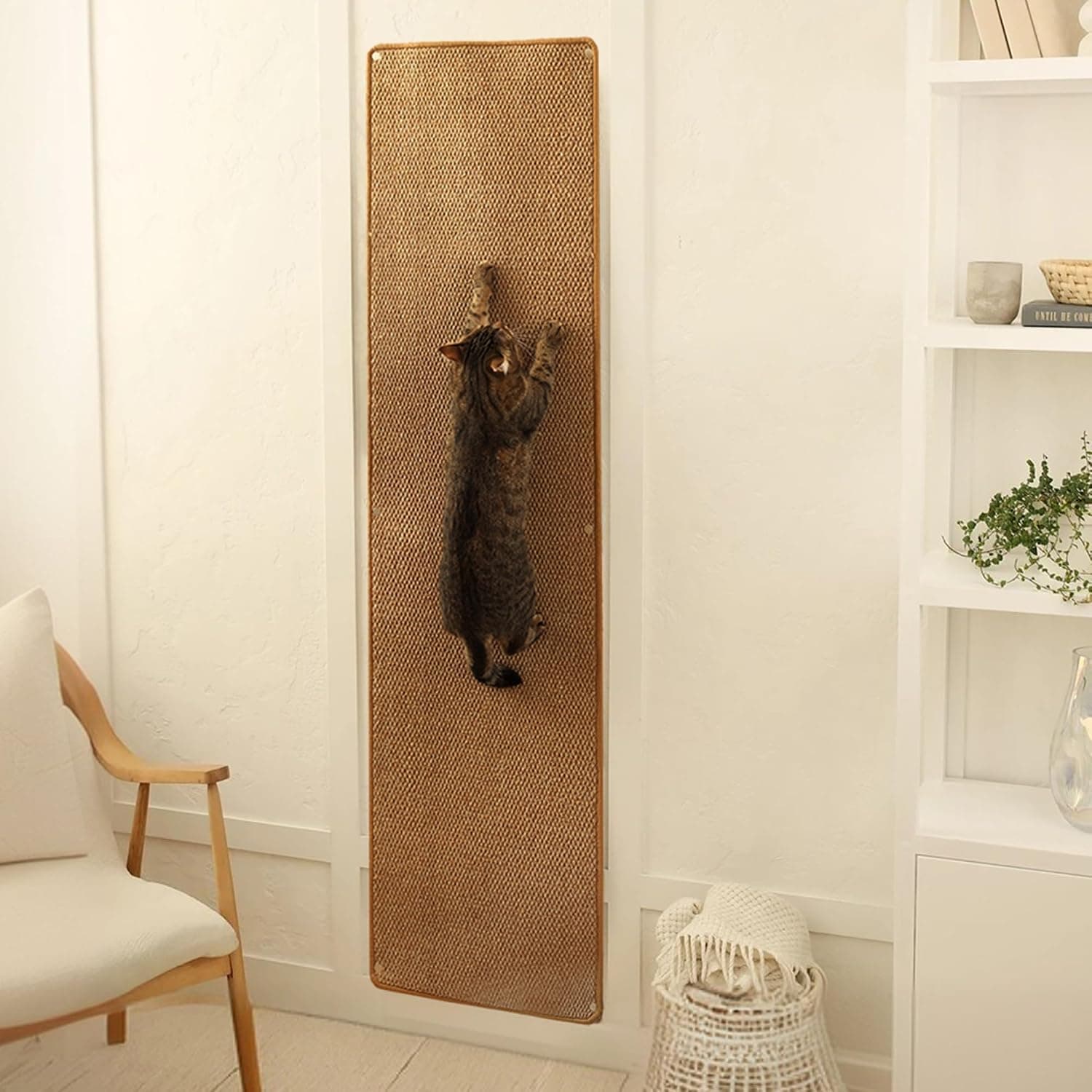
Wall Climbing Carpet
A tall wall-mounted scratch carpet with fixed nails — climb, claw, and claim vertical real estate without sacrificing the sofa.
Why we like itThe leopard-print tree is tall, unapologetic, and somehow less nightmarish than the beige towers — multiple perches and enough vertical real estate for a small gang. Pair it with the L-shaped scratcher and scratch mat so claws have a job that is not your sofa arm. Wall climbing carpet is the renter-friendly vertical add when floor space is already spoken for.
Drawbacks
- Any carpeted tree sheds fibers and needs vacuuming; “design-forward” is not maintenance-free
- Wall mounts need honest hardware and landlord-safe decisions
- A statement tree still fails if it is unstable or placed in a dead zone of the room
- You may still need a second scratch zone — one product rarely covers every cat’s preferred angle
Bottom line
Skip the scavenger hunt for nine nearly identical towers. Build a small system: one solid vertical piece, dedicated scratch surfaces, and wall options if the floor is full. That is how a living room stays a living room while the cats get the elevation they think they deserve.
FAQ
- What makes a cat tree look less like a nightmare?
- Stable proportions, materials that match your room, and scratch surfaces that are intentional — not a beige tower of peeling carpet petals. Placement against a wall helps both look and wobble.
- Do I need a huge freestanding tree?
- Not always. A solid tree plus floor scratchers and optional wall carpet often beats one mega-tower that eats the room and still gets ignored.
- How important is scratching vs perching?
- Both. Platforms without an honest scratch zone become dusty sculptures. Sisal, cardboard, or carpet panels where cats already stretch will save your sofa.
As an Amazon Associate I earn from qualifying purchases. Other links on Purrstrings may also earn a commission. It doesn’t cost you anything extra, and it never changes what we recommend. Read the full disclosure.
Related products
Leopard-Print Cat Tree
Tall, ridiculous, actually used. Vertical space, lounging, perches, and scratching in one loud piece of furniture my cats actually claim.
Why we like itL-Shaped Cat Scratcher
Two-pack cardboard L pads that go vertical or horizontal, wall-mountable, with toy balls. Furniture protection that looks like it belongs there on purpose.
Why we like itScratch Carpet Mat
Self-adhesive carpet protectors for the couch corners your cat already claimed. Scratch here, furniture lives another day.
Why we like itWall Climbing Carpet
A tall wall-mounted scratch carpet with fixed nails — climb, claw, and claim vertical real estate without sacrificing the sofa.
Why we like itMore from the desk

PrettyLitter vs Traditional Litter: Is It Actually Worth It?
Crystal litter vs clumping clay: odor, tracking, dust, and subscription cost — plus the clay setup we actually use while PrettyLitter stays comparison-only.

The Best Automatic Litter Boxes for People Who Hate Scooping
What self-cleaning litter boxes actually do, who should skip them, and the automatic box plus furniture setup we recommend from real use.

Should Your Cat Wear a GPS Tracker?
When a cat GPS tracker helps, when it is optional jewelry, and how collar fit, battery life, and subscriptions fit a real recovery plan.