
The Best Automatic Litter Boxes for People Who Hate Scooping
What self-cleaning litter boxes actually do, who should skip them, and the automatic box plus furniture setup we recommend from real use.
By Ash · Updated September 13, 20264 min read

Automatic litter boxes reduce scooping. They do not remove litter, cleaning, sensors that need babysitting, or the occasional “why is it beeping at 2am” plotline. Buy one if scooping is genuinely wrecking your week — not because the TikTok made the drum look magical.
The category promises freedom. The fine print is closer to “different chores.” Self-cleaning boxes rake, rotate, or sift after your cat leaves, stash waste in a drawer or bag, and sometimes ping an app so you know the crime happened. Useful. Not a Roomba for urine.
Who should (and should not) buy one
Good fit: multi-cat homes where scooping is constant, people with mobility limits, anyone who travels overnight and wants the box less apocalyptic on return. Bad fit: cats who refuse enclosed or moving machinery, households that will ignore waste drawers until they become a science fair, renters with zero floor space, or anyone expecting zero litter purchases forever.
What these machines actually do
- Detect that a cat used the box (weight or sensors), then run a clean cycle after a delay
- Separate clumps or solids into a sealed area you still empty on a schedule
- Optionally report usage through an app — helpful for patterns, annoying if you did not want another notification
- Still need litter topped up, sensors wiped, and a deep clean when the interior gets grim
Space, noise, and multi-cat reality
These units are furniture-sized. Measure the footprint, the height, and whether you need a plug nearby. Open-top designs can feel less cave-like for nervous cats; enclosed drums can hide the mess better and intimidate some cats more. Multi-cat homes should think in box counts, not vibes — one fancy unit does not erase the old “n+1 boxes” rule if your cats already feud over bathrooms.
We are not inventing competitor scorecards or brand bake-offs we have not run. Premium names in this category exist; prices swing wildly; liner and litter compatibility vary. Compare on sensors, waste capacity, noise tolerance in your space, and whether the brand’s consumables will quietly own your budget.
Questions to ask before you spend furniture money
- Will every cat in the house enter this shape of box, or do you need an open-top / manual backup?
- Where does the waste go, how often will you empty it, and can you stand the bag or cartridge model?
- Is the unit quiet enough for the room it will live in — bedroom hallway vs laundry closet?
- What litter does the mechanism prefer, and what happens to your monthly spend if that litter costs more?
- Can you reach every surface for a real wash day, or does the design hide mold farms?
If those answers make you tired already, that is useful information. An automatic box that becomes a guilt monument in the corner is worse than a stainless pan you actually scoop.
What we use and recommend around the auto box
Our automatic litter box pick is the open-top self-cleaning unit we actually point people to — app control, safety sensors, quiet enough for real apartments. Around it, the supporting cast matters: stainless backup boxes for cats who boycott robots, furniture that hides the unit without trapping heat and smell, and a mat for the inevitable tracking.
Automatic box + supporting cast
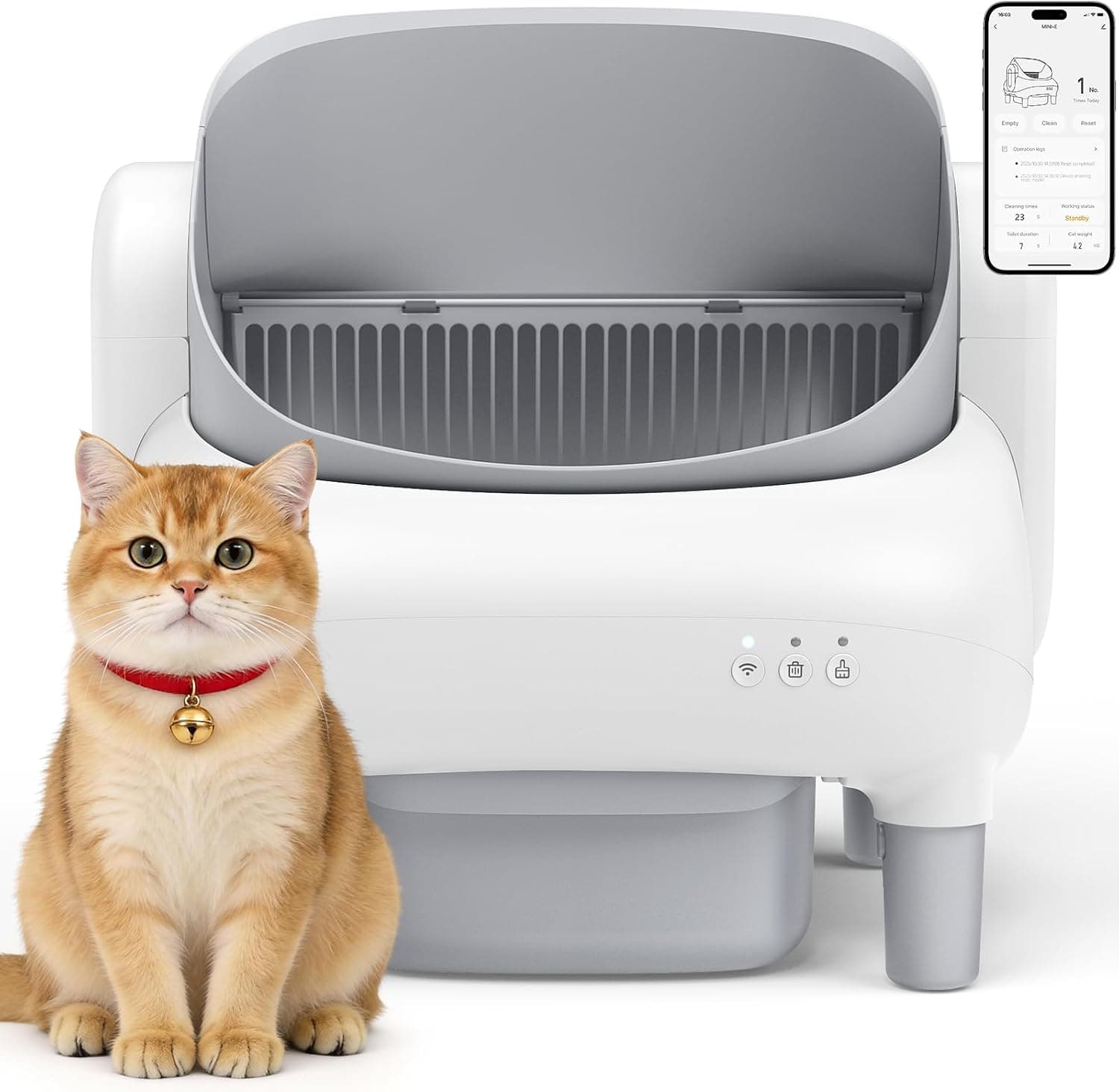
Automatic Litter Box
Open-top, app-connected, quiet in real use — and still not magic. It cuts daily scooping; stainless boxes stay because automatic ≠ maintenance-free.
Why we like it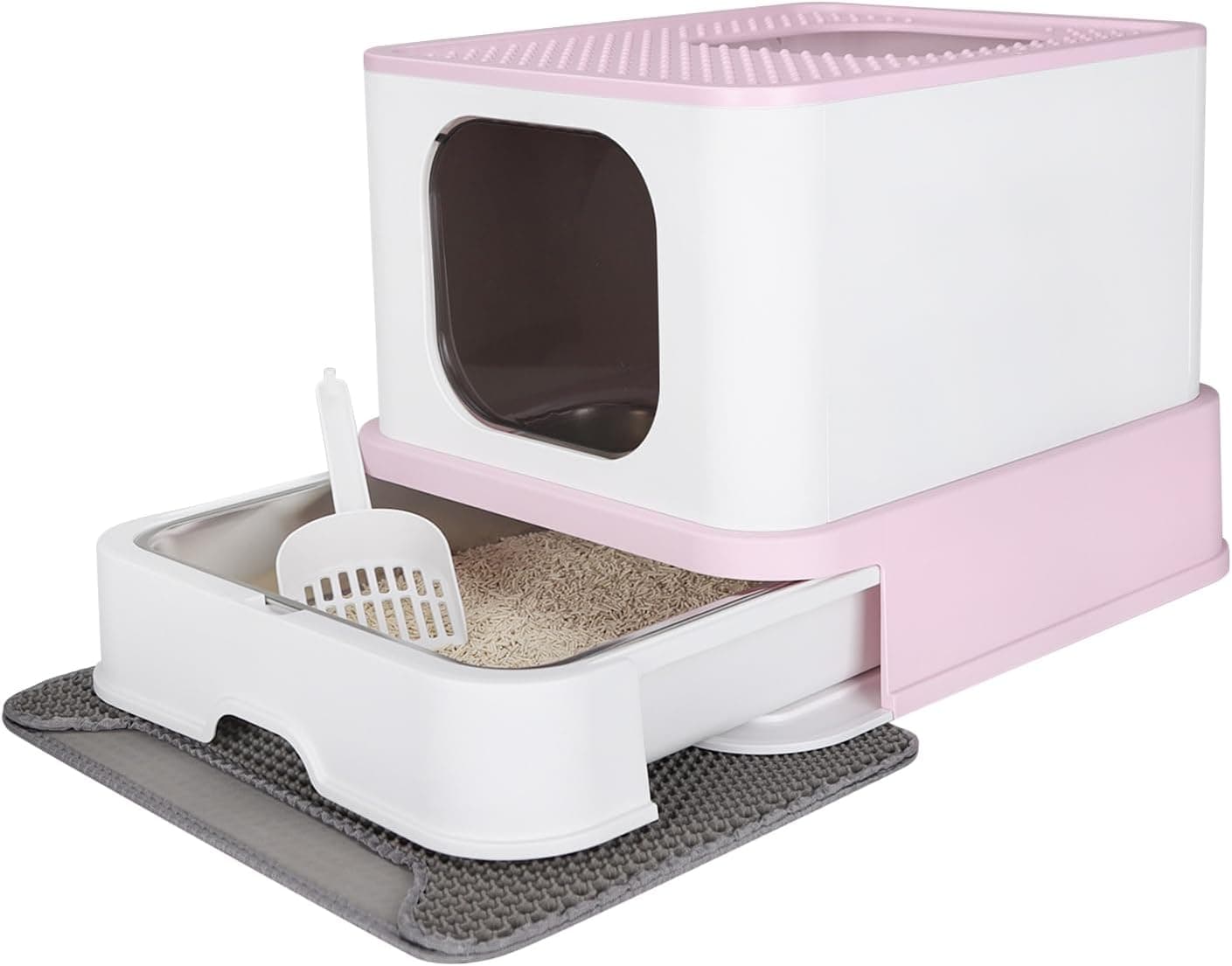
Stainless Steel Litter Box
Covered, high-sided stainless I actually use — easy to wipe down, useful for containment, and paired with an open stainless when a cat wants zero cave vibes.
Why we like it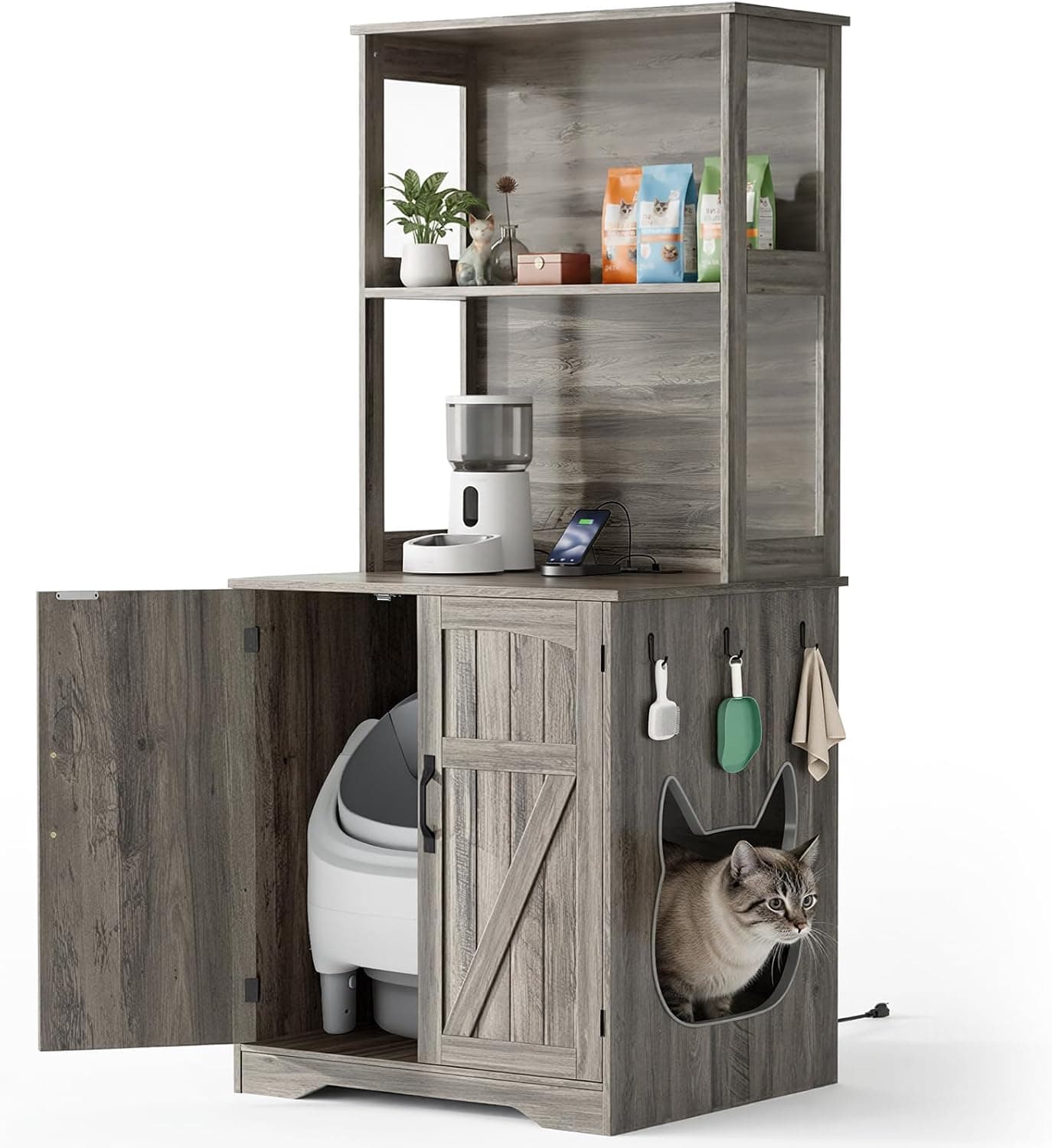
Litter Box Cabinet
A gray hidden litter enclosure with storage shelves — furniture that swallows the box and still leaves room for the backup bags.
Why we like it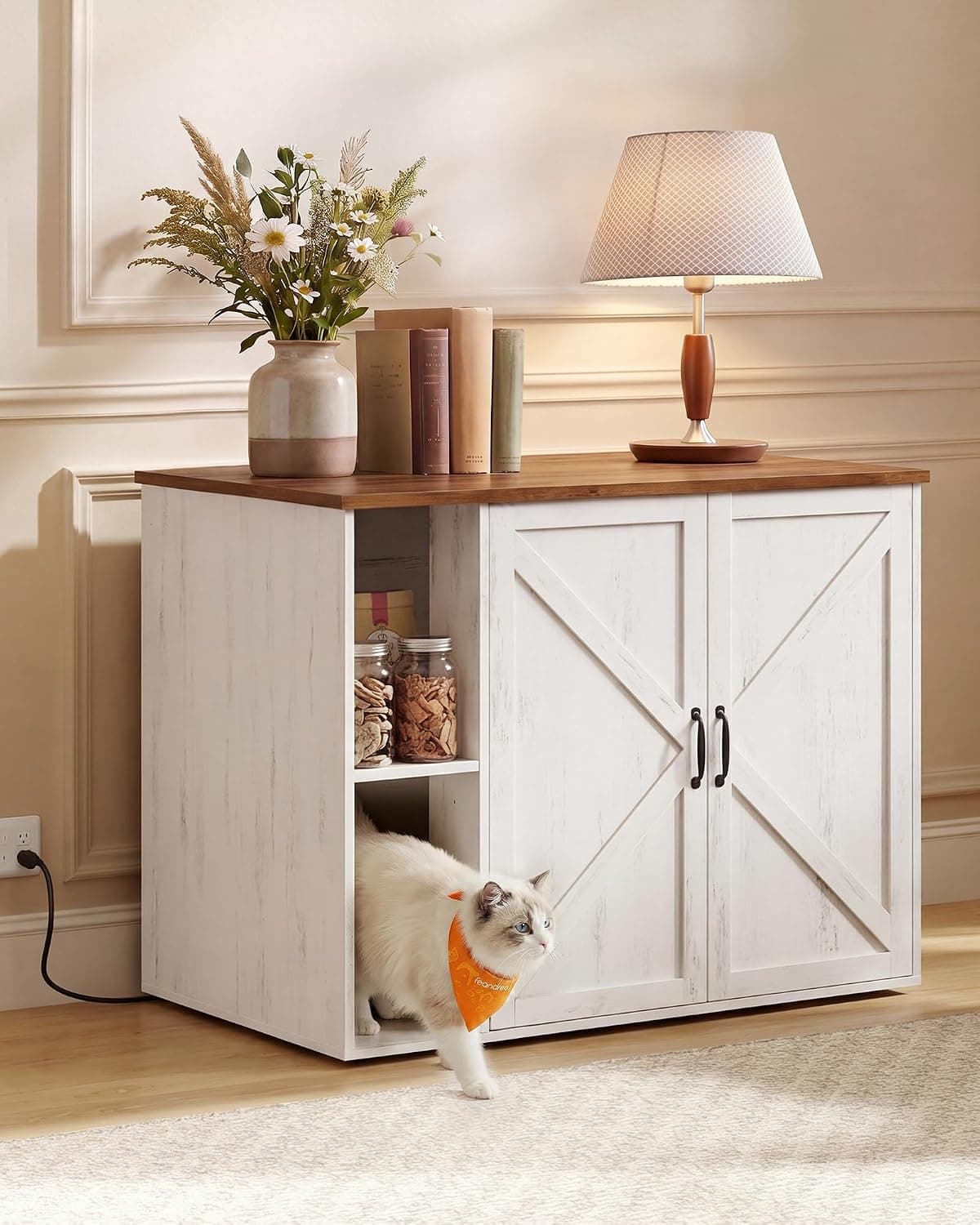
Feandrea Litter Enclosure
Hidden washroom furniture with a power outlet — built for automatic boxes that need a plug and households that want the box out of sight.
Why we like it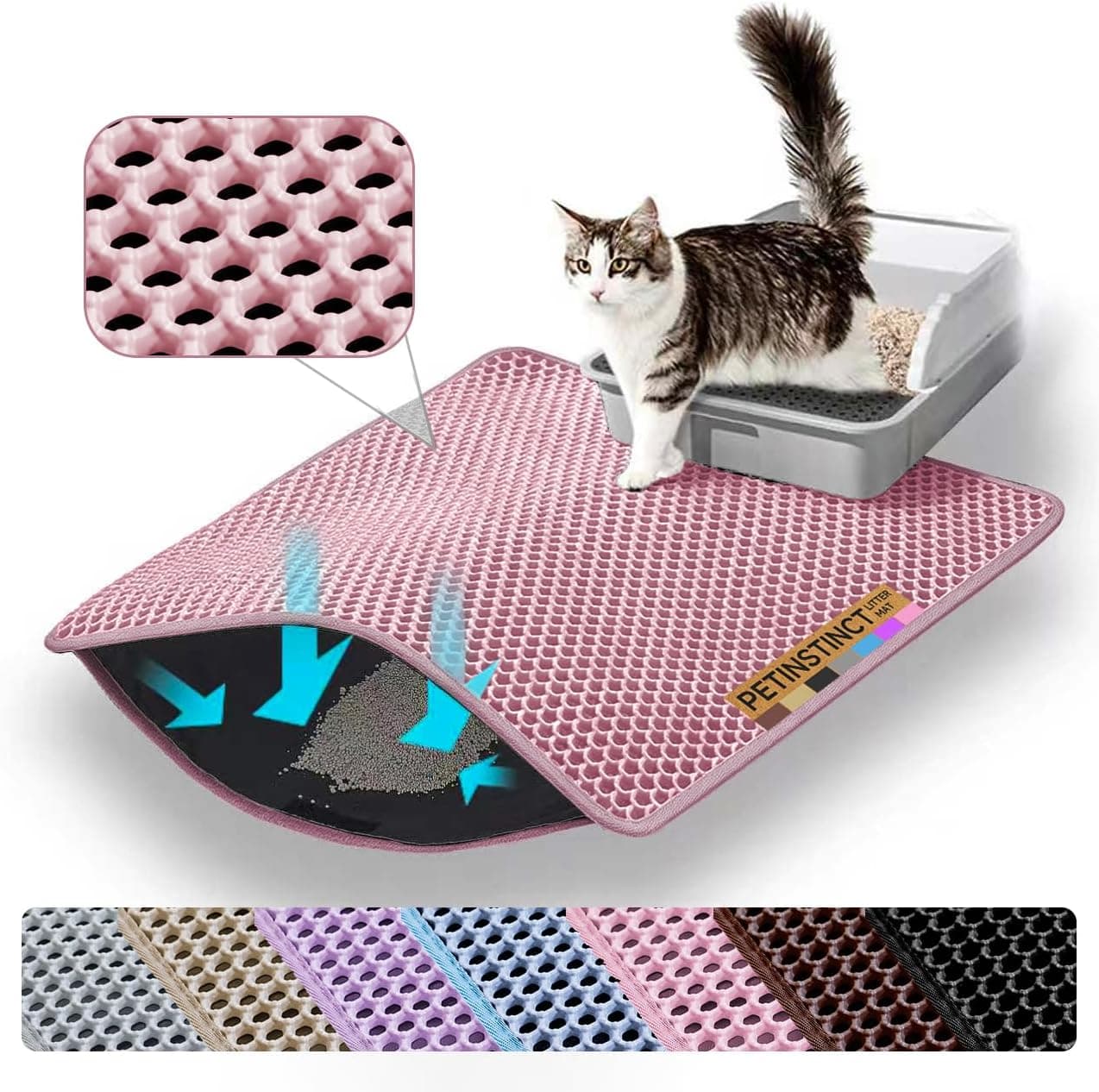
Petinstinct Litter Mat
Double-layer honeycomb mat (24×18″, pink) that catches litter before it colonizes the hallway — shake it out, rinse it, keep the floors from looking like a crime scene.
Why we like itIf you want the machine out of sight, the litter cabinet and Feandrea enclosure are the furniture route — especially when the auto box needs a power outlet. Keep a stainless manual box in rotation if you have a cat who side-eyes moving parts. The mat stays non-negotiable either way.
Maintenance nobody puts in the hero shot
- Empty the waste drawer before it becomes a character in your home
- Wipe sensors — false cycles and missed cycles often start as dirty sensors
- Budget for litter that works with the mechanism; not every clay behaves the same
- Plan a full wash day; “self-cleaning” is not “never clean”
Bottom line
Buy an automatic litter box to buy back scooping time, not to buy a personality. If you will empty the drawer, keep a backup box, and accept that apps and sensors are part of the deal, it can be one of the better quality-of-life upgrades in the cat-product universe. If you wanted zero involvement, stay with a simple stainless box and an honest scooping schedule — or wait until the marketing catches up to physics.
FAQ
- Do automatic litter boxes eliminate all scooping?
- They reduce daily scooping. You still empty a waste drawer, top up litter, wipe sensors, and deep-clean the unit. Think different chores, not zero chores.
- Are automatic litter boxes good for multi-cat homes?
- They can help when scooping volume is the problem, but one machine does not automatically replace enough bathroom capacity. Keep backup boxes if cats already compete for space.
- Who should not buy an automatic litter box?
- Cats that refuse moving or enclosed boxes, households that will ignore the waste drawer, and anyone without floor space or a nearby outlet. If you wanted a set-and-forget appliance, this category will disappoint.
- Do I still need a litter mat?
- Yes. Tracking does not retire because the box has a motor. A honeycomb mat still keeps the hallway from becoming a litter beach.
As an Amazon Associate I earn from qualifying purchases. Other links on Purrstrings may also earn a commission. It doesn’t cost you anything extra, and it never changes what we recommend. Read the full disclosure.
Related products
Stainless Steel Litter Box
Covered, high-sided stainless I actually use — easy to wipe down, useful for containment, and paired with an open stainless when a cat wants zero cave vibes.
Why we like itLitter Box Cabinet
A gray hidden litter enclosure with storage shelves — furniture that swallows the box and still leaves room for the backup bags.
Why we like itFeandrea Litter Enclosure
Hidden washroom furniture with a power outlet — built for automatic boxes that need a plug and households that want the box out of sight.
Why we like itAutomatic Litter Box
Open-top, app-connected, quiet in real use — and still not magic. It cuts daily scooping; stainless boxes stay because automatic ≠ maintenance-free.
Why we like itPetinstinct Litter Mat
Double-layer honeycomb mat (24×18″, pink) that catches litter before it colonizes the hallway — shake it out, rinse it, keep the floors from looking like a crime scene.
Why we like itMore from the desk

PrettyLitter vs Traditional Litter: Is It Actually Worth It?
Crystal litter vs clumping clay: odor, tracking, dust, and subscription cost — plus the clay setup we actually use while PrettyLitter stays comparison-only.

Cat Trees That Don’t Look Like Carpeted Nightmares
How to choose livable cat furniture — vertical space, real scratch zones, and the trees and scratchers we actually use at home.

Should Your Cat Wear a GPS Tracker?
When a cat GPS tracker helps, when it is optional jewelry, and how collar fit, battery life, and subscriptions fit a real recovery plan.