
What to Look for Before Buying a Cat Water Fountain
Capacity, noise, stainless vs plastic, and the cleaning question that decides whether a fountain helps — or becomes a science experiment.
By Ash · Updated September 13, 20263 min read

The best fountain is the one you will clean. Capacity, noise, and stainless vs plastic matter — but maintenance honesty matters more. If you will not scrub it, buy a wide bowl and refill it like a person.
Running water can convince stubborn drinkers to participate. It can also become a biofilm science project with a cute pump. This buying guide is for people who want the feature list and the chore list in the same article.
Who this is for
- Cats that ignore still bowls but hover near sinks
- Multi-cat homes that need more than a teacup of water between refills
- Anyone comparing wireless stainless options to classic filtered plastic fountains
- People who have already owned a fountain that went furry and want to not repeat that era
Cleaning reality (read this twice)
Pumps clog. Filters need swaps on a schedule. Crevices grow gunk. If weekly (or near-weekly) disassembly sounds like betrayal, a fountain will punish you. Choose designs you can take apart without a YouTube archaeology dig. Keep a backup bowl during deep cleans so nobody goes thirsty for drama.
Noise, capacity, and materials
Noise
A fountain that hums like a fish tank will get unplugged at midnight. Quiet pumps matter in apartments and bedrooms. Low water levels often make pumps louder — capacity and “will you refill” are linked to noise.
Capacity
Bigger reservoirs mean fewer top-offs and happier multi-cat math. They also mean more water sitting if you forget cleaning day. Match size to how often you honestly service the thing.
Stainless vs plastic
Stainless surfaces are easier to keep from getting permanently funky; plastic is lighter and often cheaper, with more nooks. Neither material forgives neglect. If whisker comfort matters for your cat, look at bowl width and water modes (stream vs calm surface) rather than color alone.
Placement and multi-cat logistics
Put water away from the litter box and ideally not right beside the food if your cats are dramatic about that. Multiple water stations beat one heroic fountain in a traffic jam. In multi-cat homes, watch whether a bully owns the fountain — a second still bowl in another room is cheap insurance.
Hard water leaves mineral crust. That is not a moral failing; it is chemistry. Expect more scrubbing in hard-water cities, and do not assume a filter makes descaling optional forever.
Fountains we actually use
Two lanes we run: a wireless stainless fountain for cordless flexibility and serious capacity, and the Catit PIXI when you want a filtered running-water unit with adjustable drinking modes.
Fountain picks from real use
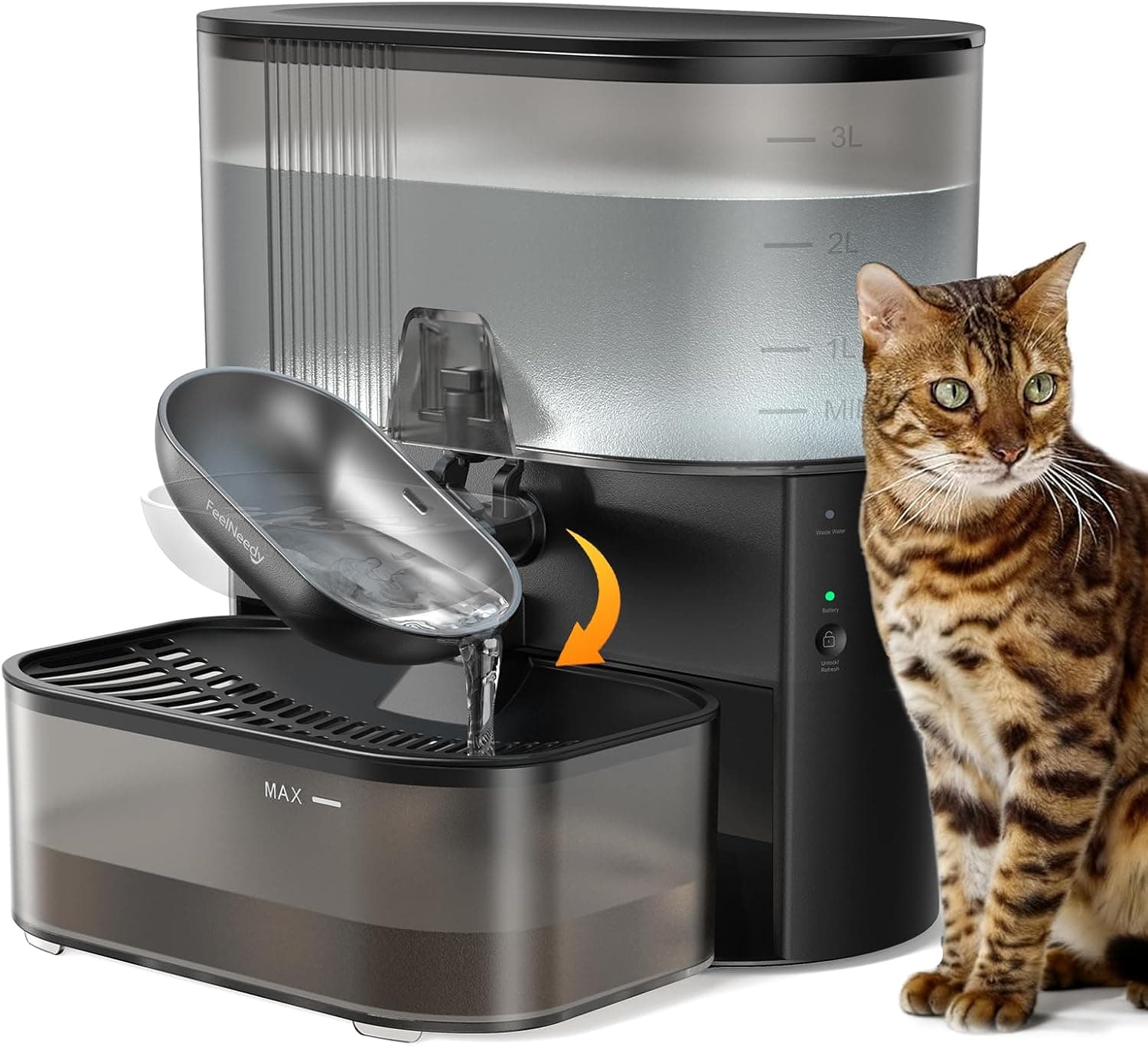
Wireless Cat Fountain
Cordless stainless fountain with serious capacity and a filter-free design — placement without outlet tyranny. I also run a Catit PIXI, so this isn’t one-true-fountain cosplay.
Why we like it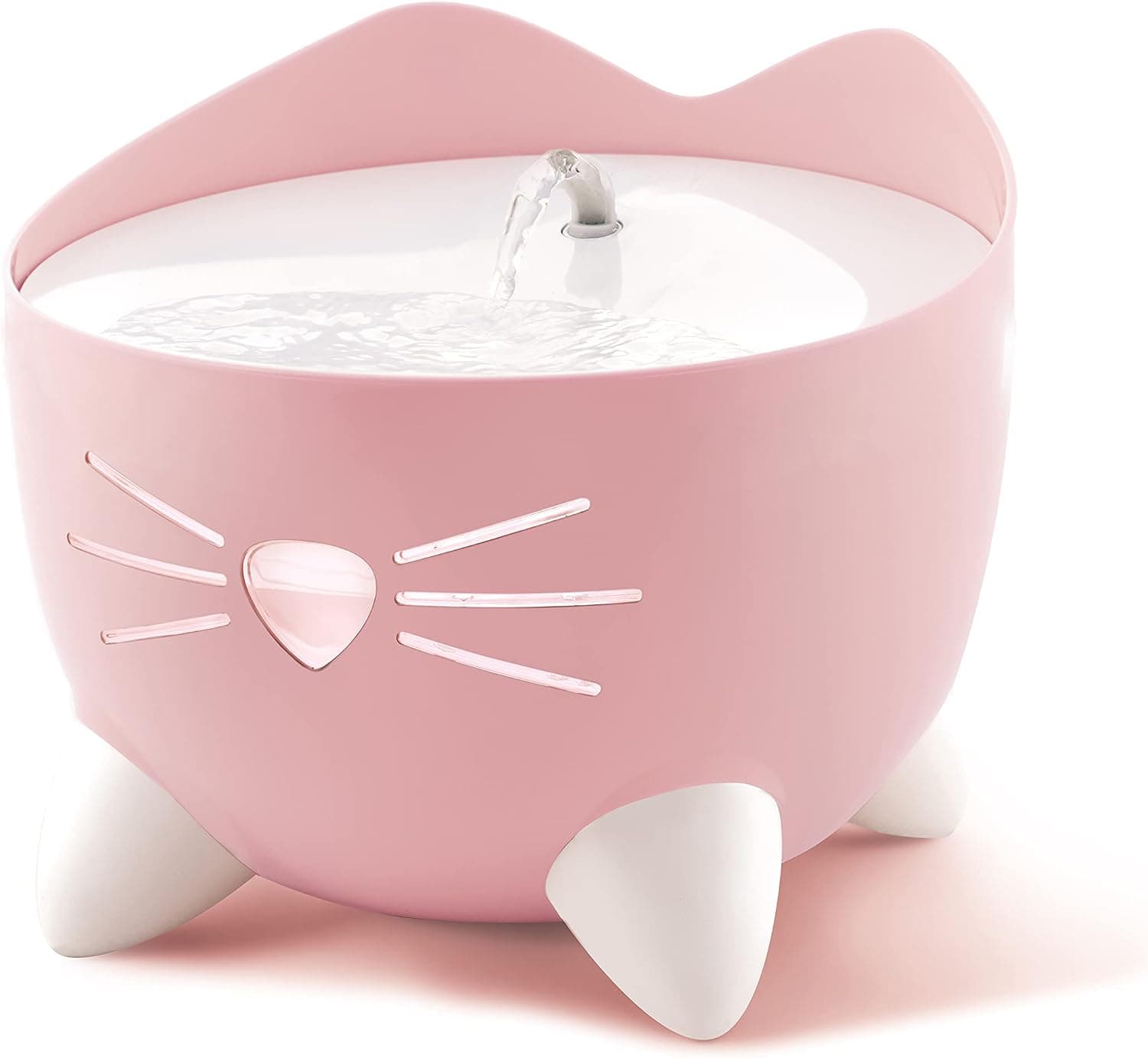
Catit PIXI Fountain
The conventional filtered fountain in my setup: plug-in, replaceable filters, multiple flow modes. The useful question is PIXI vs wireless — not “is it good?”
Why we like itThe wireless stainless option leans filter-free bowl design and wastewater separation — less cord anxiety, still not zero cleaning. The PIXI brings triple filtration and calm/stream/bubble modes for cats who are picky about how water moves. Pick based on whether you want cordless stainless simplicity or a classic filtered fountain workflow.
Drawbacks
- Every fountain adds a chore cycle; skipping it is worse than no fountain
- Filters and replacement parts are recurring costs on many models
- Some cats ignore fountains entirely — do not assume “running water” is universal cat religion
- Wireless units still need charging discipline; dead pump, sad cat
Bottom line
Shop for a fountain like you shop for a kitchen gadget you will actually wash. If that sentence made you flinch, stick with wide stainless bowls and fresh water. If you are ready for the maintenance, the wireless stainless and Catit PIXI are the two we use and recommend — different workflows, same rule: clean it or lose the plot.
FAQ
- Are cat water fountains worth it?
- They are if your cat prefers moving water and you will clean the unit on a real schedule. If maintenance is a hard no, a wide bowl with fresh water is the better product.
- Stainless or plastic fountain?
- Stainless is often easier to keep from getting permanently funky; plastic is lighter and frequently cheaper. Cleaning access matters more than material marketing.
- How often should I clean a cat fountain?
- Plan on regular full cleans (many households aim near weekly) plus filter changes on the manufacturer’s schedule. Low water and dirty pumps also make fountains louder.
As an Amazon Associate I earn from qualifying purchases. Other links on Purrstrings may also earn a commission. It doesn’t cost you anything extra, and it never changes what we recommend. Read the full disclosure.
Related products
Wireless Cat Fountain
Cordless stainless fountain with serious capacity and a filter-free design — placement without outlet tyranny. I also run a Catit PIXI, so this isn’t one-true-fountain cosplay.
Why we like itCatit PIXI Fountain
The conventional filtered fountain in my setup: plug-in, replaceable filters, multiple flow modes. The useful question is PIXI vs wireless — not “is it good?”
Why we like itMore from the desk

PrettyLitter vs Traditional Litter: Is It Actually Worth It?
Crystal litter vs clumping clay: odor, tracking, dust, and subscription cost — plus the clay setup we actually use while PrettyLitter stays comparison-only.

The Best Automatic Litter Boxes for People Who Hate Scooping
What self-cleaning litter boxes actually do, who should skip them, and the automatic box plus furniture setup we recommend from real use.

Cat Trees That Don’t Look Like Carpeted Nightmares
How to choose livable cat furniture — vertical space, real scratch zones, and the trees and scratchers we actually use at home.